AI Ops
Observability
Telemetry Engineering
IT Operations
Why AIOps Fails Without Engineered Telemetry


Nick Randall
April 2 • 4 Min Read
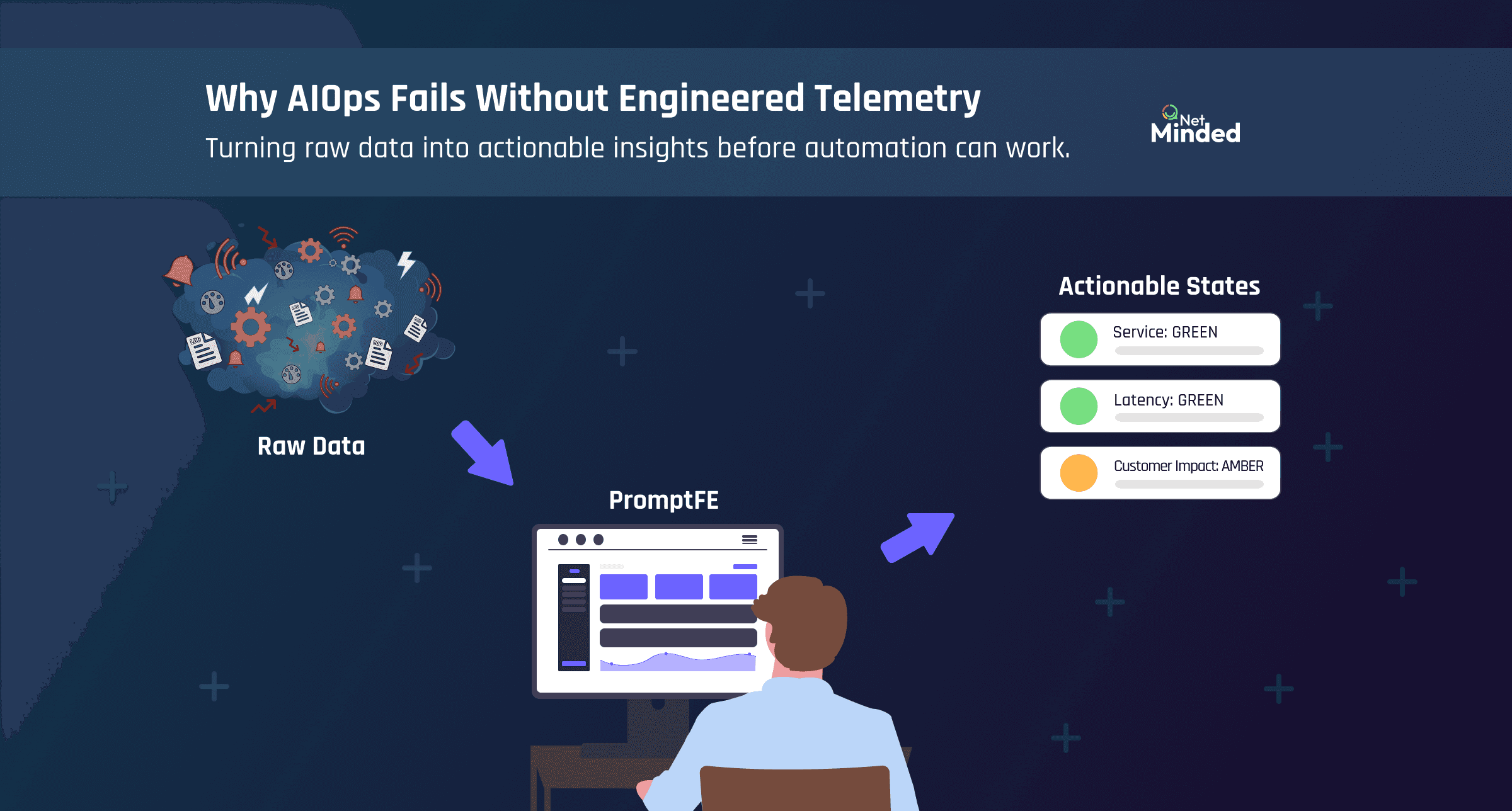
Turning raw data into actionable insights before automation can work
There’s a simple belief behind most AIOps plans:
Collect enough data, and the platform will figure it out.
It sounds right.
Modern systems are full of data — metrics, logs, traces. Tools like ServiceNow and Grafana promise insight and automation.
But it doesn’t work like that.
Dashboards grow. Alerts fire.
And teams still ask:
“What is actually happening?”
The Real Problem
The platforms are not broken.
They do one thing well:
They process the data you give them.
The problem is the data.
It is not ready for decisions.
Telemetry Is Not Understanding
Most telemetry is built for collection, not meaning.
It tells you:
latency
CPU
packet loss
But engineers don’t think like that.
They think:
Is this a problem?
Is a customer impacted?
Do I act now?
That step — from data to judgement — is missing.
So AIOps tools are forced to guess.
What Goes Wrong
Feed raw data into AIOps and three things happen:
1. Too much noise
Small changes look like big problems.
2. Weak signals
Data does not line up, so correlation fails.
3. No trust
Teams don’t act, because the system might be wrong.
So automation stalls.
Humans stay in the loop.
Dashboards Don’t Fix It
Better dashboards don’t solve this.
They just show the problem more clearly.
A human still has to:
read the graphs
add context
make the call
The thinking is still in the engineer’s head.
The Missing Layer
What’s missing is a common telemetry data layer.
A layer between raw data and AIOps.
This layer:
turns data into simple states
applies the same rules every time
makes data ready for action
For example:
Instead of:
latency = 12ms
You get:
service = GREEN
Instead of:
packet loss spike
You get:
customer impact = AMBER
Now the system can act.
Where the Expertise Comes From
This is the key shift.
The rules should not live in code.
They should come from subject matter experts.
The people who understand the network.
With the right approach, they can:
define what “good” looks like
set thresholds and patterns
explain why a state is RED or GREEN
Scoring is a context schema for your data. While traditional schemas show what data is, scoring shows what it means right now. Each score embeds system state and expert insight, turning raw numbers into instant, actionable guidance.
Without writing code.
That knowledge becomes part of the data.
Shared. Repeatable. Trusted.
What Changes
When you do this:
Noise drops
Signals make sense
Automation works
Teams move faster
Tools like ServiceNow and Grafana finally deliver value.
Because they are no longer guessing.
Final Thought
AIOps was never the first step.
First, you must make telemetry usable.
Until then, more data just means more confusion.
Prompt Feature Engineering (PromptFE) creates this missing layer.
It gives you:
a common telemetry data layer
expert judgement built into the data
no-code tools for engineers to define meaning
So your data is not just collected.
It is understood.
And your AIOps tools can finally drive real automation.

Resources
Copyright NetMinded, a trading name of SeeThru Networks ©